Lake Sinclair is a true water paradise in central Georgia. This beautiful reservoir, fed by the Oconee River and located near its sister lake, Lake Oconee, offers every aquatic activity imaginable — from boating and fishing to swimming and relaxing on the water. Owned and managed by Georgia Power, Lake Sinclair features a spider web of scenic coves and channels that make it a favorite destination for residents and visitors alike.
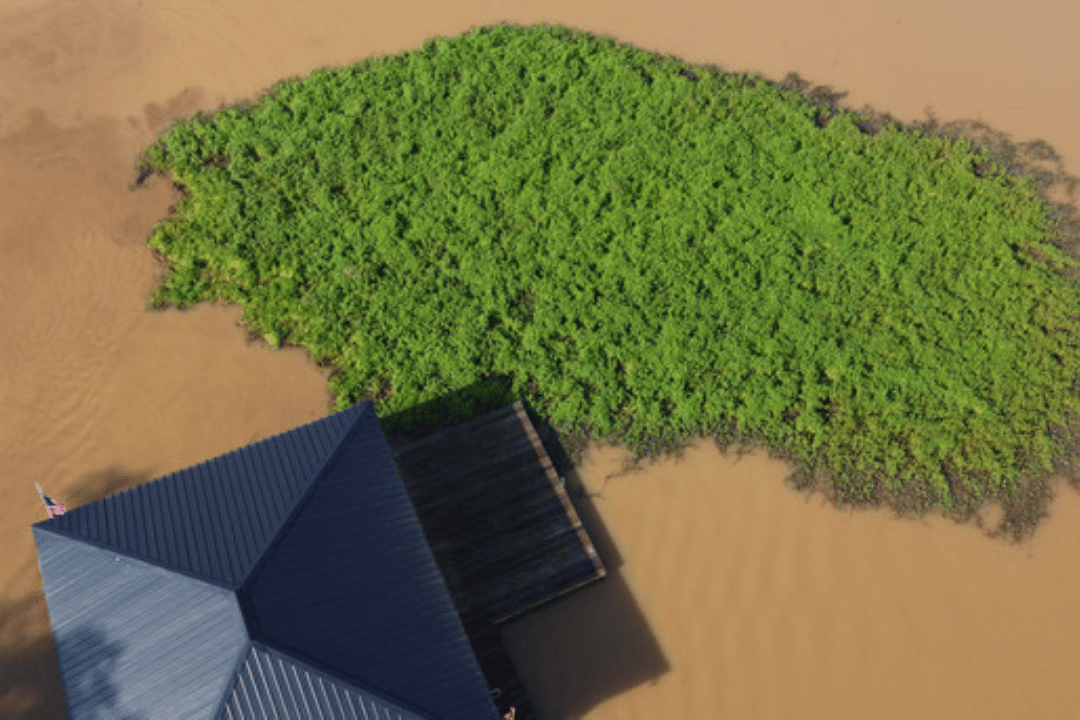
However, this same complex shoreline can create challenges. Debris, silt, and nutrient buildup often lead to invasive aquatic plants that thrive in the nutrient-rich waters.
Common Invasive Aquatic Plants on Lake Sinclair
Two major invaders are currently impacting many shorelines:
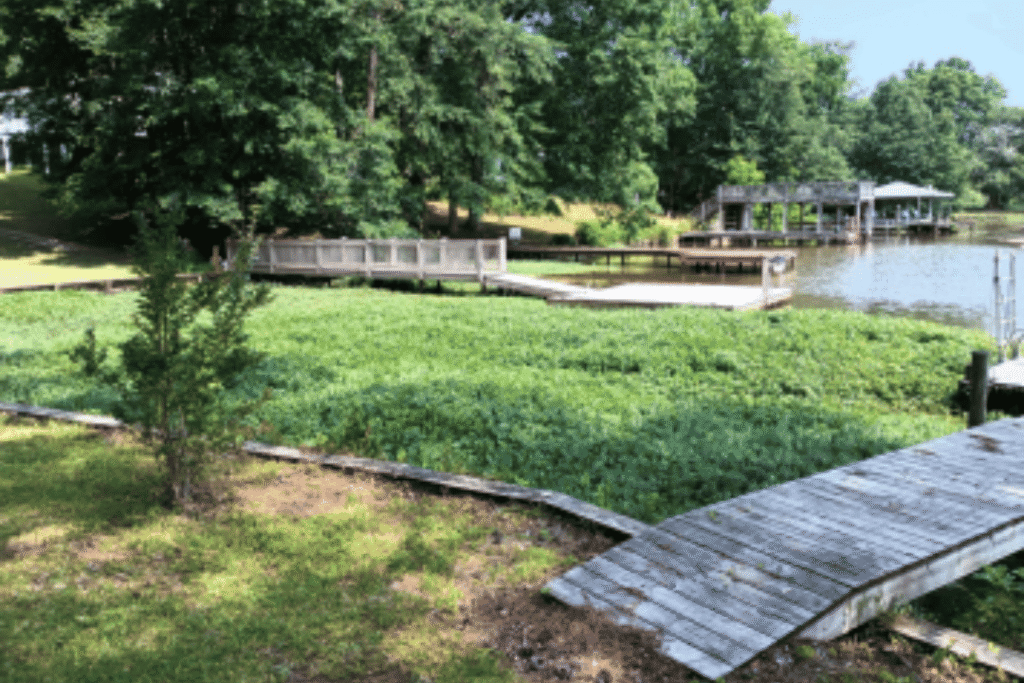
- Alligator Weed: This floating plant forms thick, dense mats that can choke shorelines and shallow areas.
- Hydrilla: One of the most invasive aquatic plants in the world, Hydrilla is rapidly spreading along property owners’ shorelines. It grows quickly, tangles around boat propellers, wraps around swimmers’ legs, and reduces water clarity and recreational enjoyment. Recent reports from Lake Sinclair residents highlight how Hydrilla is making swimming and boating more difficult in affected coves.
What’s Causing the Buildup?
Excess sediment and muck create the perfect environment for these invasives by overloading the water with nutrients. Common causes include:
- Stormwater runoff from surrounding areas
- Poor management practices from nearby developments
- Use of harmful chemicals that kill beneficial native plants, leading to large amounts of decaying biomass that further fuels nutrient overload
Left unchecked, this cycle reduces water depth, harms fish habitats, and lowers property enjoyment and value.
Effective Shoreline Management Solutions
The good news is that practical, proven solutions can help restore your shoreline and protect Lake Sinclair’s natural beauty.
Key Management Steps for Lake Sinclair Residents:
- Clear debris and trash buildup along your shoreline regularly.
- Implement erosion control measures on and around your property to reduce sediment runoff.
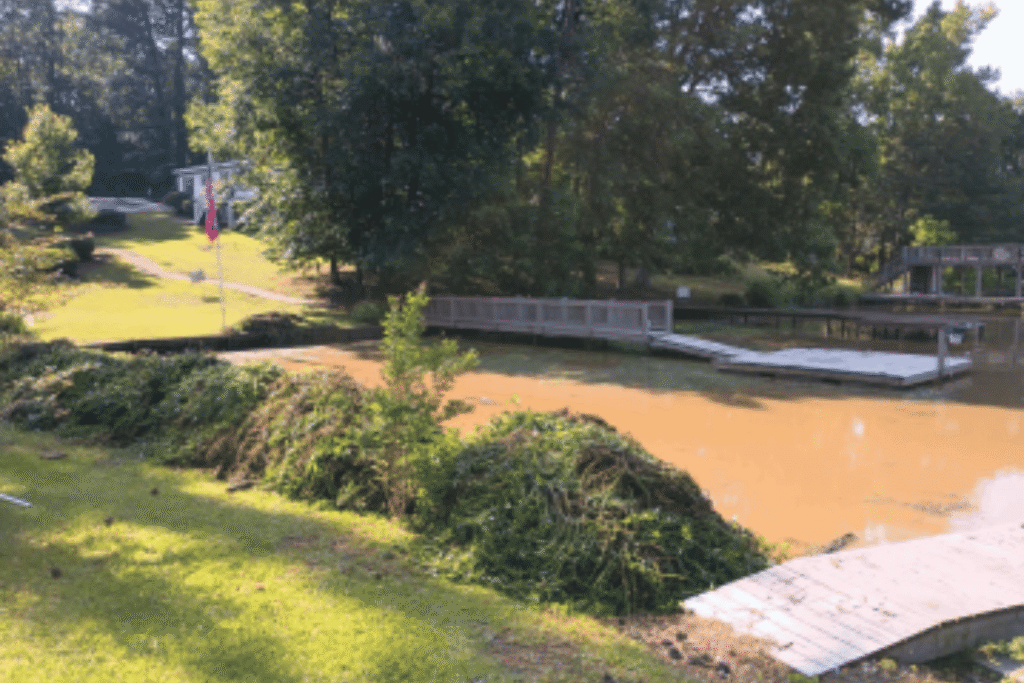
- Mechanical Removal of lake weeds, debris, and muck.
- Hydraulic Suction Dredging — a highly effective method that removes thousands of pounds of biomass, silt, and sand. The material is then discharged into geo dewatering bags for a clean, contained dewatering process.
These mechanical and hydraulic approaches quickly regain water depth, improve water clarity, and reduce the nutrient load that feeds invasive plants. Unlike relying solely on chemicals or unproven gimmicks, mechanical and hydraulic suction dredging offers a reliable, long-term solution while preserving the lake’s natural habitat.
Simple Terms: Remove the mess at the source.
Why Choose Mechanical & Hydraulic Methods?
Mechanical and hydraulic solutions are preferred because they physically extract the problem (excess biomass and sediment) instead of just treating symptoms. This helps maintain a healthier balance in Lake Sinclair’s ecosystem and supports better long-term recreation and habitat quality.
Our Commitment to Responsible Maintenance
As a Certified Inspector with the Georgia Soil and Water Conservation Commission (GSWCC), Heavy Equip LLC follows strict Best Management Practices (BMPs) on every project. We obtain all necessary permits through Georgia Power and work within their Shoreline Management guidelines to ensure your project is fully compliant.
Protecting Lake Sinclair starts with individual shorelines. If you’re dealing with Alligator Weed, Hydrilla, or general muck buildup on your Lake Sinclair property, proactive maintenance can make a big difference.
Ready to restore your shoreline?
Contact Heavy Equip LLC today for a consultation. Let us help you regain your waterfront access and contribute to keeping Lake Sinclair beautiful for future generations.
Serving Lake Sinclair and surrounding Georgia areas
Georgia Power Permit Compliant • Certified • Environmentally Responsible