
Fall turnover is a natural process that occurs as cooler autumn air lowers the temperature of a pond’s warm surface water. This denser, cooler water sinks and mixes with the stagnant, low-oxygen water that has accumulated at the bottom during the summer. While turnover is a normal seasonal event, it can trigger oxygen crashes, fish kills, and sudden changes in water appearance if excess organic material is present on the pond bottom.
Does Spraying a Pond Create More Decomposed Biomass Before Fall Turnover?
Yes. Chemical treatments (such as algaecides or herbicides) that kill aquatic vegetation or algae often produce a large volume of dead plant and algal material. This biomass sinks to the bottom and begins decomposing. The result is a significantly greater load of organic debris heading into the fall mixing period.
Here’s how the process typically unfolds:
- Mass die-off and sinking — The killed vegetation and algae settle to the pond floor.
- Bacterial decomposition — Bacteria break down the material and consume large amounts of dissolved oxygen in the process.
- Toxic bottom layer forms — An anoxic (oxygen-free) muck layer builds up, often rich in hydrogen sulfide and other byproducts.
- Fall turnover mixes the layers — Cool winds and temperature changes circulate the toxic, low-oxygen bottom water throughout the pond.
- Oxygen crash and potential fish kills — Overall dissolved oxygen can drop sharply, sometimes leading to widespread stress or death of fish and other aquatic life.
A Better Approach: Reduce Biomass Before Turnover Occurs
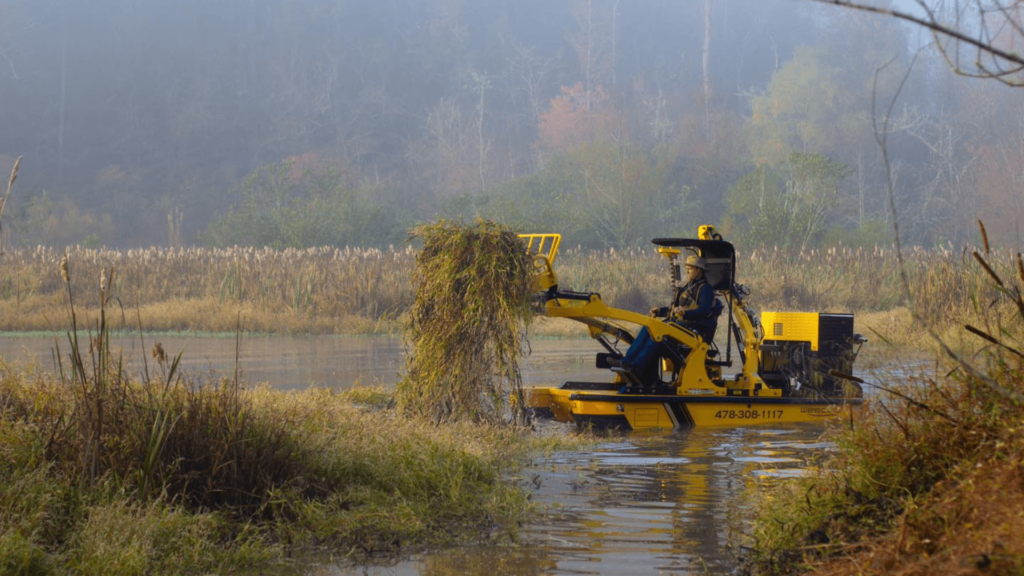
Mechanical removal of excess vegetation and organic debris, combined with beneficial microbial treatments, substantially lowers the amount of material that would otherwise sink, rot, and contribute to the anoxic muck layer. By keeping biomass under control throughout the growing season, you reduce the risk of a catastrophic oxygen crash when fall turnover arrives. A responsible maintenance plan focused on physical removal and microbial support helps maintain healthier oxygen levels, clearer water, and a more stable pond environment year-round. Ready to protect your pond this fall?
Contact us to schedule a consultation for your waterways. We are located in Dublin, GA, and would be glad to help you develop a practical, effective maintenance plan.